What to Keep in Mind When Counting Calories

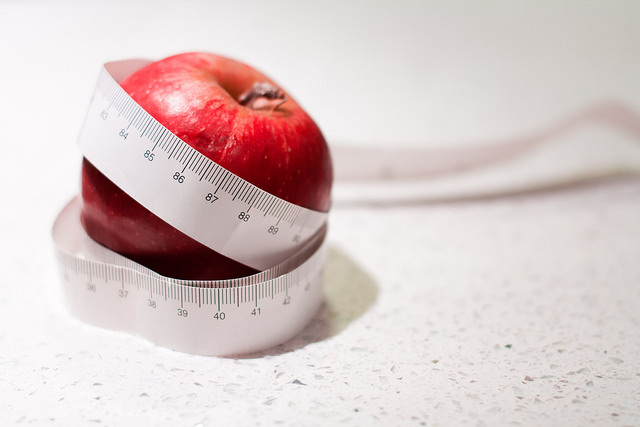
You know that counting calories is essential when it comes to losing weight, but do you really understand exactly what calories are? Here are a few things that you should understand about your caloric intake.

  1. Know the definition. A calorie is a term used to describe how much energy there is in a food. Your body needs a certain amount of calories to function, but excess calories turn into fat.
  2. Know your limit. Everyone has a different daily calorie limit, and it all depends on your sex, age, height, and weight. You’ll need to visit a doctor or find a chart online to determine your personal recommended daily intake.
  3. Create a calorie log. Keep track of how many calories you consume by recording your meals in a daily diary.
  4. Evenly distribute calories. Plan ahead of time so that you can split up your calories between each meal of the day. Be careful not to consume the majority of your calories in the morning, because you won’t have many remaining to "spend" on dinner.
  5. Beware of beverages. Many people don’t realize it, but the calories in drinks can really take a toll on your daily calorie limit. Be careful to record all of the beverages that you consume in addition to your meals.

Eat the Right Amount of Calories For You [Choose My Plate]
Estimated Calorie Requirements [WebMD]
American Cancer Society Calorie Counter [American Cancer Society]
4 Health Benefits of Cardio Workouts

People need cardio workouts in order to improve your heart’s function and keep it strong and healthy, and lucky for you, it’s actually much easier to squeeze in a cardio workout than you might expect. Here are just four great health benefits of cardio exercise.

1) It improves your heart’s health.
The most important benefit of cardiovascular exercise is the positive effect that it has on your heart. Things like running or biking make your heart pump blood at a faster rate than normal, and because your heart is one big muscle, this strengthens it even after you stop exercising.

2) It improves your mood.
Because cardiovascular exercise releases hormones that fight off stress and promote a sense of well being, you might feel happier and more energetic after working out.

3) It increases your metabolic function.
The more intense the cardio exercise, the faster it makes your metabolism function. This helps to maintain your weight or even promote weight loss.

4) It decreases recovery time.
If you hate cardio and love strength training, you might want to reconsider. Jogging or walking after performing another workout is known to quicken your recovery time, making the day after a long workout much more comfortable on your body.

5 Great Benefits Of Cardiovascular Exercise! [BodyBuilding.com]
The Brain-Boosting Effects of Cardiovascular Exercise [Women’s Health]
Aerobic Exercise: Top 10 Reasons to Get Physical [Mayo Clinic]

Are You Brushing Your Teeth Correctly? Find Out Here!

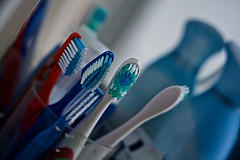
You’ve brushed your teeth for as long as you can remember, but how can you be sure that you’re doing it correctly? Check out these simple steps for proper tooth brushing to find out.

  1. Twice a day is only the beginning. Although many people are taught to brush their teeth in the morning and the evening, that’s actually only the minimum amount. Brushing your teeth after a large meal or any time you drink a potentially staining beverage is always a good idea.
  2. Brush in a circular motion. Dentists recommend brushing in a circular motion up toward the gums rather than the usual back and forth motion across the teeth. This technique removes bacteria without causing gum pain.
  3. Stop the final rinse. While many people rinse their mouths out with a bit of water after brushing, this is harmful because it removes the beneficial film delivered from the toothpaste. If you feel the need to rinse, only put a small amount of water in your mouth and swish it across your tongue rather than around your teeth and gums.
  4. Don’t skimp on flossing. Flossing is just as important as brushing, and it should be done almost as often. Bonus points if you floss before brushing, as that enables the toothpaste to coat those hard-to-reach places between the teeth.

How to Brush [Colgate]
Proper Brushing [ADHA]
Am I Brushing My Teeth Correctly? [Lifehacker]
How to Brush Your Teeth [Crest]

Are You Washing Your Hands Correctly? Find Out Here!

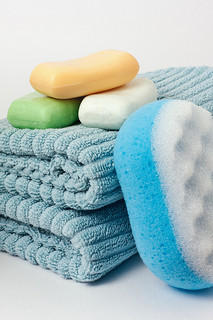
Washing your hands thoroughly can help to prevent you from contacting diseases, reduce the risk of food borne illness, and can even stop you from spreading germs if you’re already sick. Here are a few tips that will show you the correct way to wash your hands.

  1. Apply soap and water. First, completely soak your hands with warm water. Apply as much soap as you need in order to cover both hands—remember, the more the better.
  2. Rub palms together. Vigorously rub your palms together in a circular motion to clean germs from the center of your hands.
  3. Clean between fingers. Clean the hard-to-reach places between your fingers by placing one hand on top of the other as if you were holding hands with another person. Rub the fingertips from one hand between the fingers of the other hand, and then vice versa.
  4. Clean fingernails. Rub the fingernails of one hand across the palm of the other hand to remove dirt and germs. Clasp the hands together with the backs of your fingers to the opposite palm, and then rub the hands back and forth.
  5. Rinse and dry. Rinse hands completely with water, and then dry them with a single-use paper towel. Don’t forget to use the towel to turn off the faucet in order to prevent contacting more germs, and then toss it away.

When & How to Wash Your Hands [CDC]
How to Wash Your Hands Properly by Mary Calvagna, MS [BIDMC]
Clean hands protect against infection [World Health Organization]

Pin It on Pinterest