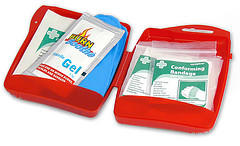
You never know when you’ll have a mishap in the kitchen or take a spill, and the best way to prepare for these types of at-home injuries is by preparing a well-stocked first aid kit. To be truly prepared, you should store one of these personal injury kits in your car, as well. Here are a few essentials that every good first aid kit should contain:
- A first aid instruction booklet in case of complex injury or illness
- Adhesive bandages in a variety of different sizes
- Adhesive cloth tape
- Sterile gauze pads for administering medications or creams
- Antiseptic wipe packets for treating small cuts or burns
- Roller bandages in a few different sizes for wrapping sprains or pulled muscles
- Sharp scissors
- Tweezers for removing splinters or other shrapnel
- An oral thermometer (non-mercury, non-glass)
- Non-latex gloves
- Acetaminophen and ibuprofen, for headache or other muscle aches
- Instant cold packs
- Safety pins
- Hydrocortisone cream (1%)
- Calamine lotion for poison ivy, sunburn, and insect bites
- A flashlight (plus extra batteries)
- A list of emergency phone numbers (include your physician, children’s physician, emergency contacts, etc.)
Anatomy of a First Aid Kit [Red Cross]
First Aid Kit [Kids Health]
First-Aid Kits: Stock supplies that can save lives [Mayo Clinic]


 Equal Housing Opportunity